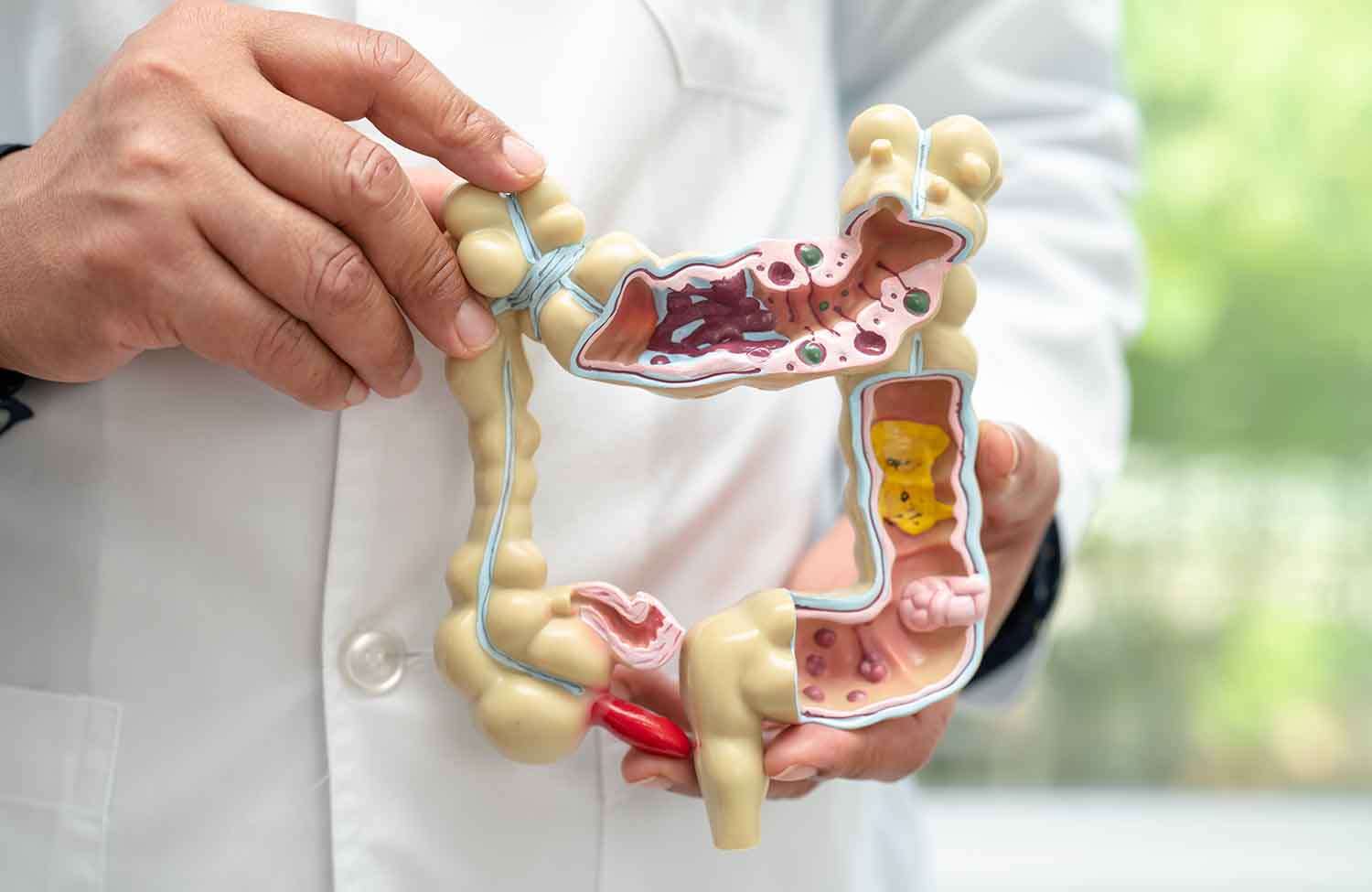
Colon polyps are tiny lumps that form on the inside of the colon, which is the big intestine. They often don’t create any problems and are found during routine checkups. Most polyps are not dangerous, but some can turn into colorectal cancer if they are not treated.
Knowing what colon polyps are, if they are cancerous, and when to remove them will help keep your digestive system healthy in the long run.
What Are Polyps in the Colon?
A colon polyp is a tiny group of cells that grows on the inside of the colon or rectum. These growths might be different sizes and shapes. Some look flat, while others grow on a stalk like a mushroom.
Polyps are not unusual, especially in people over 45. Most of them are not malignant, but some types can become cancerous over time.
Regular screening is necessary because polyps don’t usually create apparent symptoms in the early stages.
Do colon polyps cause cancer?
Not all polyps in the colon become cancerous. But certain varieties are more dangerous than others.
The most popular kinds are:
Hyperplastic Polyps
These are normally tiny and don’t turn into cancer very often. A lot of the time, they are in the lower colon and rectum.
Adenomatous Polyps (Adenomas)
People think these polyps might be malignant. Most colorectal malignancies start as adenomatous polyps, although not all adenomas turn into cancer.
Serrated Polyps
Some serrated polyps, especially the bigger ones, may also make cancer more likely.
Doctors generally suggest removing polyps when they are found because it is hard to tell how dangerous they are just by looking at them.
What Causes Colon Polyps?
There are a number of things that can make it more likely that you will get polyps.
Some common risk factors are:
- Over the age of 45
- A family history of colon polyps or cancer in the colon
- A diet high in processed or fatty foods
- Being overweight
- Smoking
- Too much drinking
Crohn’s disease and ulcerative colitis are two examples of inflammatory bowel illnesses.
Both heredity and lifestyle are major factors.
Signs of Colon Polyps
A lot of colon polyps don’t show any signs. But sometimes, persons may have:
- Stool with blood
- Changes in how the bowels work
- Pain in the stomach
- Fatigue without a known cause because of anemia
These symptoms can also be linked to other digestive disorders, making medical assessment essential.
What Causes Colon Polyps?
A colonoscopy is the best way to find colon polyps.
A doctor uses a flexible tube with a small camera to look at the lining of the colon during this surgery. If polyps are identified, they can frequently be taken out right away during the same treatment.
Other ways to diagnose may include:
- CT colonography
- Tests that use stool
- Flexible sigmoidoscopy
Regular screenings can find polyps before they turn into cancer.
When Is It Time to Remove Colon Polyps?
When doctors find colon polyps, they usually tell people to get them taken out. This is because it’s hard to know which polyps might turn into cancer in the future.
The surgery that commonly gets rid of them is called polypectomy. It is done when you get a colonoscopy.
Reasons for taking it out are:
- Preventing cancer from happening
- Using a microscope to look at the tissue
- Making it less likely that problems may happen in the future
In rare cases, very large polyps may need to be taken out by surgery.
What Happens After You Take Out a Polyp?
After the polyp is removed, it is sent to a lab for testing. This helps determine whether the polyp was cancerous, precancerous, or not.
Your doctor may order other tests after the first ones, depending on the results.
People with a lot of polyps or polyps that are particularly bad for them may need to get colonoscopies more often to make sure their colon is healthy.
Can you stop polyps from growing in your colon?
You can’t always stop it from happening, but you can lessen your risk by changing several things about your life.
Some good things to do are:
- Eating a lot of fiber, fruits, and vegetables
- Eating less red and processed meats
- Staying at a healthy weight
- Working out on a regular basis
- Not smoking or drinking too much alcohol
- Following the prescribed times for screening
It’s really important for your digestive health to make good choices in your life.
Conclusion
Colon polyps are common and typically not harmful, although some of them can become cancerous over time. Finding and getting rid of colorectal cancer early are two crucial things you can do to stop it.
Doctors can discover and remove polyps before they become a serious problem if patients over 45 or younger with risk factors get regular tests.
If your bowel habits change or you have a family history of colon problems, the best way to keep your digestive health is to contact a doctor.